
A project can report an LTV of 47% and, with the same debt, have an LTV of 70%. The difference may simply be the property value used: what it is worth today or what it is expected to be worth after construction.
Before concluding that there is a substantial safety margin, you need to understand the calculation. LTV and LTC can help you assess property financing, but only when you know the debt included, the valuation basis and the investor's rights.
Short answer
LTV, or loan-to-value, compares financing with property value. LTC, or loan-to-cost, compares financing with the project's cost.
- LTV: how much debt is there relative to the reference value?
- LTC: what share of the budget is financed with debt?
- Repayment priority: who gets paid first if the available money is insufficient?
A lower ratio can be favourable when comparing otherwise similar transactions. It does not guarantee repayment, measure the probability of default or replace the contracts.
Every amount and scenario in this article is hypothetical and exists to explain the calculations. None represents a Dolux project, commercial offer or return.
What is LTV and how do you calculate it?
The basic formula is:
LTV = financing included ÷ property value × 100
If the debt is €700,000 and the property is valued at €1,000,000:
€700,000 ÷ €1,000,000 × 100 = 70%
The debt equals 70% of that reference value. This does not mean that you have a 70% chance of recovering your capital, or that a fall in property value of up to 30% would be harmless.
For lending to individuals, Banco de Portugal explains LTV and the use of the lower of purchase price and appraisal value. That framework has its own scope: do not automatically apply housing-loan limits to a crowdfunding offer.
For any project, ask for the precise definition. Two documents may use the term LTV for calculations that include different debts or valuation assumptions.
Which debt is included?
Imagine a property with a current valuation of €1,000,000, financed by:
- a €500,000 bank loan;
- a €200,000 loan from investors.
Looking only at the €200,000 would produce a ratio of 20%. Including both loans produces 70%. The first calculation can describe the size of one tranche, but it does not show the combined debt.
Check whether the disclosed figure includes bank financing, other loans, undrawn amounts and interest added to the debt. Today's drawn balance may differ from the maximum committed financing. Compare the same basis and identify liabilities that compete for the project's money even if they fall outside the reported LTV.
Current value or value after completion?
Return to the €700,000 debt. If the property is worth €1,000,000 today, its current LTV is 70%. If an appraisal estimates €1,500,000 after completion, the ratio against that future value is about 46.7%.
€700,000 ÷ €1,500,000 × 100 ≈ 46.7%
The second figure depends on events that have not yet happened: completing the work and finding a buyer or another exit on the expected terms.
An appraisal should therefore identify:
- its date and the valuer;
- the condition of the property assumed;
- assumptions about construction, permits and sale;
- whether the amount is a current value, an as-completed value or a commercial estimate.
A picture of a finished building does not turn a forecast into available cash. For context on different access models, see our guide to fractional real estate investment.
What does LTC add?
LTC replaces property value with project cost:
LTC = financing included ÷ project cost included × 100
With a €1,000,000 budget and €700,000 of debt, LTC is 70%. In an example funded solely by debt and equity, the remaining €300,000 would need to come from equity.
In practice, verify the source of that difference. It might involve unpaid commitments, buyer deposits or shareholder loans. These sources do not necessarily have the same availability or position relative to creditors.
Check what the budget includes: acquisition, construction, professional fees, permits, taxes, financing costs, selling costs and contingency. Comparisons lose meaning when one budget includes costs that another omits.
The European Banking Authority's Guidelines on loan origination and monitoring include LTV and LTC among property-development metrics. They are a banking-analysis reference, not by themselves a rule applying to every crowdfunding platform.
A lower LTC can conceal a problem
Suppose the budget increases from €1,000,000 to €1,200,000 while debt stays at €700,000. LTC falls from 70% to 58.3%.
The ratio is lower, but an extra €200,000 of costs has appeared. Without financing for that gap, the project may be in a weaker position.
If the entire overrun is financed with new debt, total debt rises to €900,000 and LTC reaches 75%. The useful question is: who funds the overrun, from what resources and on what terms?
Compare the underlying amounts before the percentages
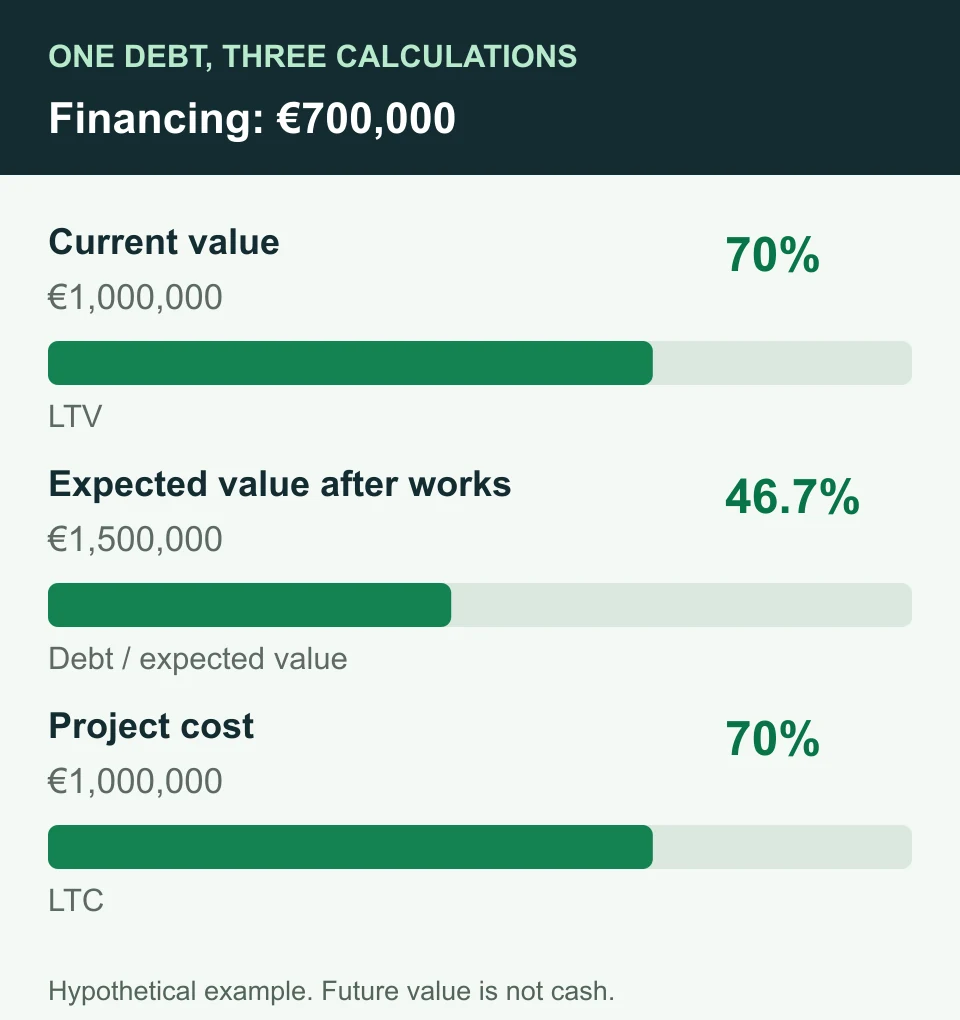
In this example, current value and budget happen to equal €1,000,000. That is not a general rule. A property could have been bought below appraisal value, need expensive work or have lost value.
When comparing opportunities, write out the full calculation below each percentage. Without knowing the financing and the value or cost basis, you do not yet have comparable ratios.
Why repayment priority changes the outcome
LTV describes a relationship between amounts. It does not, by itself, establish your rights over the property.
A lender is a creditor under the contractual structure. An equity investor has a different position and generally bears residual risk. Neither should automatically be equated with buying part of the property itself. How Dolux works explains the financing model the brand is developing.
In Portugal, Article 686 of the Civil Code provides repayment preference associated with a mortgage, subject to special privileges and registration priority. The effective position depends on security, registration, competing claims and applicable rules.
Before attributing value to security, establish:
- whether a mortgage exists and which asset it covers;
- who benefits from it and who may enforce it;
- whether other creditors have priority;
- whether the investors' loan is subordinated;
- which expenses may reduce recoveries.
Security does not eliminate loss risk or assure a quick recovery. If the documents do not clarify the investors' position, seek an explanation from the provider and, when appropriate, independent legal advice.
A downside scenario: how could the €200,000 lenders lose money?
For this simulation alone, assume:
- reference property valuation: €1,000,000;
- bank loan: €500,000;
- investors' loan: €200,000;
- initial combined LTV: 70%;
- sale and recovery costs: €50,000 in every scenario.
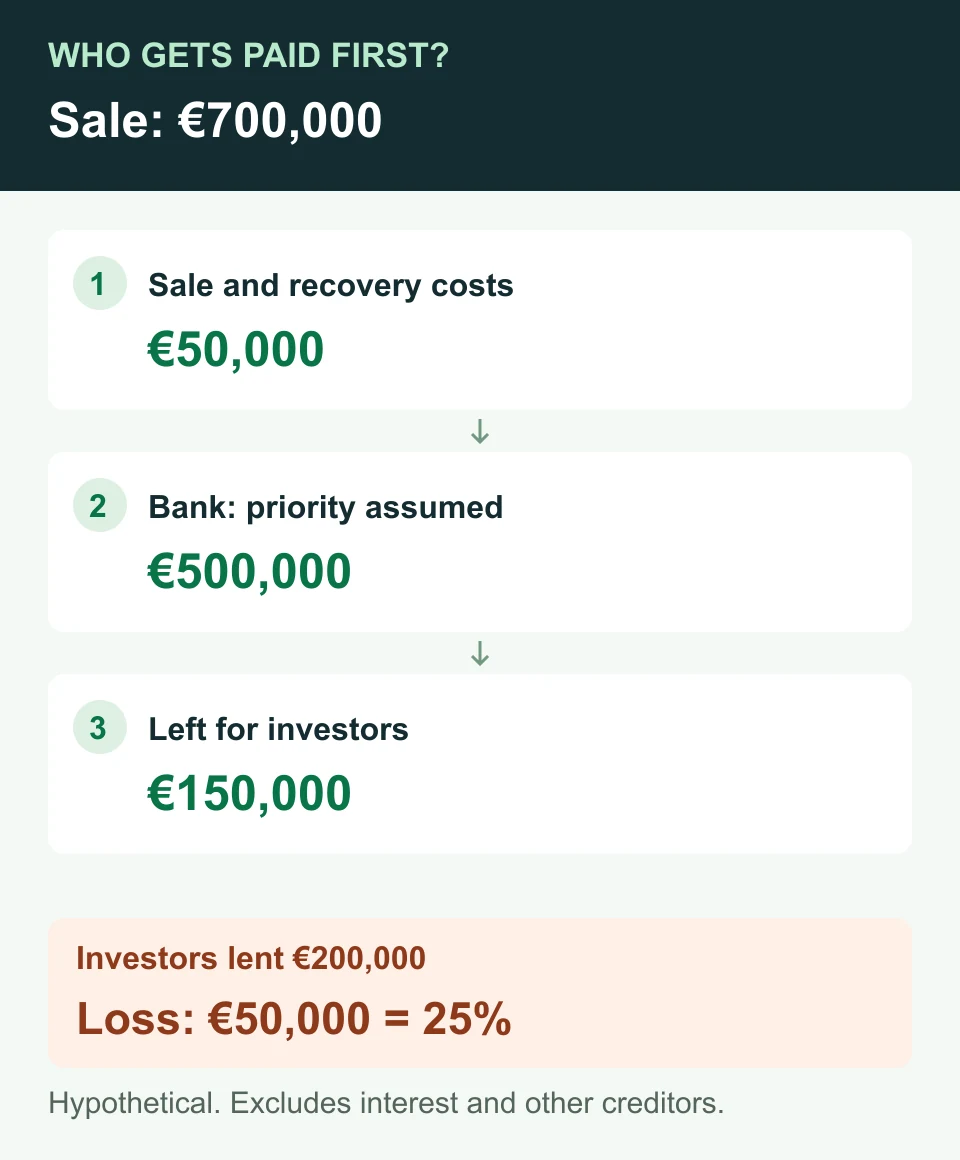
Assume the bank gets paid before the investors, after these costs. We exclude interest, other creditors and other recoveries to isolate priority. This is a hypothetical distribution order, not a universal description of insolvency proceedings.
| Sale price | Capital recovered by investors | Investors' loss |
|---|---|---|
| €1,000,000 | €200,000 | €0 (0%) |
| €800,000 | €200,000 | €0 (0%) |
| €700,000 | €150,000 | €50,000 (25%) |
| €600,000 | €50,000 | €150,000 (75%) |
For a €700,000 sale:
€700,000 − €50,000 costs − €500,000 to the bank = €150,000
Of the €200,000 lent by investors, €50,000 is missing. The loss is 25%, even though the initial LTV was 70%.
In this model, the minimum sale price covering both loan principals and costs is €750,000. The simplified buffer against the original valuation is therefore 25%, rather than 30%. Additional interest or expenses would reduce it. Creditors with equal priority could receive a different distribution.
What to request before investing
Use the ratios as a starting point for concrete information:
- Financing breakdown: amounts by creditor, drawn and committed debt, accumulated interest and priority.
- Identified appraisal: date, valuer, current value and assumptions behind any as-completed value.
- Complete budget: incurred costs, remaining costs, contingency and responsibility for overruns.
- Developer capital: how much has been contributed, in what form and what still depends on future commitments.
- Repayment plan: sale, rental income or refinancing; alternatives if the main exit fails.
- Documents establishing your rights: contract, security, enforcement conditions and subordination.
For offers covered by Regulation (EU) 2020/1503, the key investment information sheet under Article 23 is a central investor-information document. It does not replace examination of contracts and security. The regulation also explains the limits of deposit-guarantee and investor-compensation protection.
Request information about permits, construction progress and contracted sales where relevant. A useful collateral value does not, by itself, fund the remaining work.
Using this analysis in your decision
LTV and LTC help you ask better questions. They do not decide whether the term, concentration or potential loss is acceptable for you.
A project can have a favourable debt-to-valuation ratio and still repay later than expected. It may also depend on the same developer or market as investments you already hold. Access with a small amount of money lowers the entry requirement, without removing these risks.
Before looking for a comfortable percentage, consider whether you can absorb a delay and a loss. If you are still organising your emergency reserve and objectives, the guide to starting to invest from scratch can help establish that foundation.
Dolux is being built to make property financing easier to access and understand. You can follow the project through the waitlist. This educational article does not announce an available investment offer.
Frequently asked questions about LTV and LTC
Does a 60% LTV mean an investment is safe?
No. It only means that the financing included equals 60% of the value used. The appraisal, other debts, recovery costs and investor rights still need assessment. No single percentage guarantees repayment.
What is the difference between LTV and LTC?
LTV compares financing with property value; LTC compares financing with project cost. An expected sale value above the budget can produce low LTV and high LTC at the same time.
Can LTV change after I invest?
Yes. Debt, loan drawdowns or a new appraisal can change it. To interpret the trend, check whether the methodology and timing basis remain comparable.
Can a mortgaged property fail to cover all repayments?
Yes. Sale proceeds can be below appraisal value and may need to cover expenses and priority claims. Recovery depends on the applicable rights and the money actually available.
Does low LTV mean high liquidity?
No. Collateral can have value and still take time to sell or enforce. LTV, default risk and liquidity are different dimensions.
Sources and references
Accessed on 11 September 2026:
- Banco de Portugal: creditworthiness assessment and LTV, in the context of bank lending to individuals.
- European Banking Authority: Guidelines on loan origination and monitoring, Section 5.2.8 and Annex 3.
- Portuguese Civil Code: mortgages, Article 686.
- Regulation (EU) 2020/1503, Articles 19 and 23.
General information, not a personalised recommendation. Investing can involve partial or total capital loss and illiquidity. The simulations do not estimate scenario probabilities. Interpreting contracts and creditor priority may require independent legal advice.